Your manufacturing capability may be complex. Your website shouldn't be
We design Odoo websites that help manufacturers explain what they make, show where it fits and turn technical interest into qualified enquiries.
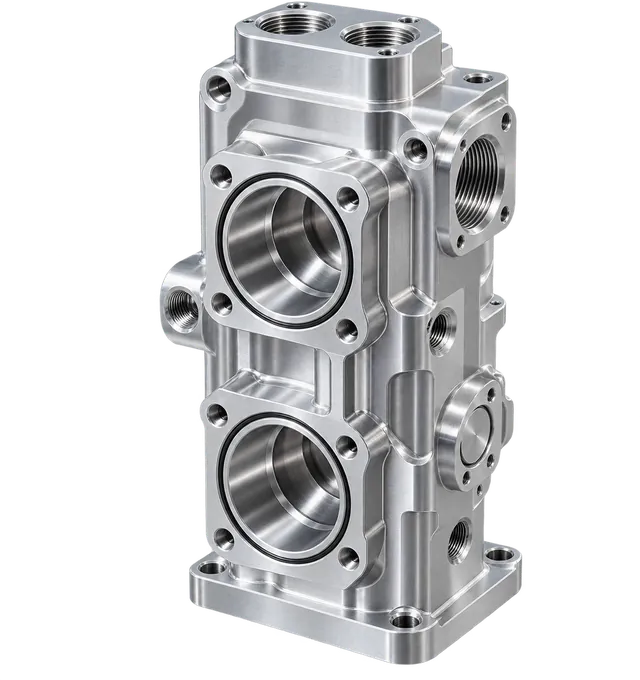
Engineered components. Built to specification.
Precision-machined components for demanding industrial applications, from prototype to repeat production.
Manufacturing websites often have too much technical information and not enough buying structure
A customer needs to understand capabilities, products, quality and fit quickly, without navigating the website like an internal engineering database.
Capabilities are buried
Machining, fabrication, assembly, finishing and other capabilities are often described in long generic pages instead of clear commercial sections.
Products are difficult to compare
Large technical catalogues become lists of part numbers rather than useful ways for buyers to narrow down the right solution.
Industries are missing
Visitors often need evidence that the manufacturer understands their sector, standards and operating environment.
Quality claims lack proof
Certifications, inspection processes, tolerances and traceability should support trust rather than live on a forgotten PDF page.
RFQ starts too late
A buyer reaches a product or capability page with clear intent, then has to restart the conversation on a generic contact form.
The website undersells the company
A technically capable manufacturer can still look dated or small when the frontend has not received the same investment as operations.
Build the site around the questions industrial buyers actually ask
The strongest manufacturing websites make it easy to establish capability, technical fit and trust before the first sales conversation.
Dedicated capability pages for machining, fabrication, assembly, finishing, engineering or other production processes.
Structured product families, technical pages and catalogues where a repeat product range exists.
Industry pages that connect manufacturing capability to real applications, standards and customer requirements.
Materials, tolerances, machinery, capacity, inspection and technical documentation placed where buyers need them.
Certifications, quality processes, traceability, testing and compliance presented as part of the buying decision.
RFQ paths linked directly to the relevant product, drawing, specification or capability.
Not every manufacturer needs eCommerce. Many need much better product discovery
For standard products or configurable industrial ranges, Odoo can support a structured catalogue without forcing every buyer through an online checkout.
The website helps the customer narrow the range and carry useful product context into the RFQ.
Make it easier to send a useful enquiry, not just a message
A strong industrial website should help sales receive more context before the first reply.
Capability
The buyer finds the relevant process, product family or industry page.
Technical Fit
Specifications, materials, tolerances and documentation help confirm suitability.
RFQ
The customer adds quantities, files, drawings or project information.
Odoo CRM
The enquiry enters the appropriate Odoo sales process with useful website context.
Technical credibility needs more than a home page and a machine list
Capabilities
Explain the processes you perform, where your strengths are and which project types are a good fit.
Industries
Show how capabilities translate into relevant use cases for automotive, food, energy, marine, medical or other sectors.
Quality
Certifications, inspection capability, traceability and standards that reduce buyer risk.
Materials
Dedicated content for important materials or manufacturing constraints where that supports search and qualification.
Case Studies
Demonstrate how real technical challenges were solved without disclosing commercially sensitive customer information.
Resources
Datasheets, guides, drawings, brochures and engineering resources that support the evaluation process.
The website becomes more useful when it is closer to the commercial data behind it
Products
Product information already managed in Odoo can support customer-facing catalogues and product pages.
CRM
Quote requests and enquiries can move directly into the sales process instead of relying on disconnected form tools.
Sales
The website can support the transition from enquiry to quotation within the same commercial ecosystem.
Documents
Technical downloads and relevant product resources can sit closer to the products they support.
Customer Accounts
Where required, customer-specific commercial experiences can build on the wider Odoo relationship.
eCommerce
Standard products can later move toward online ordering without rebuilding the entire public website on another platform.
Translate technical capability into a customer-facing structure
Understand
Current website, capabilities, products, industries, content and existing Odoo setup.
Structure
Capabilities, products, industries, resources and RFQ journeys are reorganised around buyer intent.
Create
The website and reusable Odoo components are designed and implemented.
Verify
Forms, product paths, mobile UX, redirects and critical buyer journeys are checked.
Most manufacturing sites fit Basic or Extended
The main distinction is whether the website is primarily a corporate lead-generation site or needs a structured product catalogue and more advanced technical content.
Manufacturing Website
- Custom Odoo design
- Capabilities
- Industries
- Quality / certifications
- Contact & RFQ
- CRM integration
- Responsive implementation
Manufacturing + Product Catalogue
- Everything in Basic
- Product catalogue
- Product families
- Technical filters
- Datasheets & drawings
- Product-specific RFQ
- Advanced SEO structure
- Multilingual options
Common questions from manufacturers
Is Odoo suitable for a manufacturing company website?
Yes. It can be particularly useful when the company already manages CRM, products, sales or other commercial processes in Odoo and wants the public website closer to those systems.
Do manufacturers need eCommerce?
Often not. Many manufacturers are better served by a structured product catalogue with technical information and RFQ functionality rather than direct online checkout.
Can Odoo handle large industrial product catalogues?
It can support structured product websites, but the customer-facing architecture and filtering need to be designed around how buyers actually search the range.
Can buyers upload drawings with an RFQ?
That type of workflow can be incorporated where the project requires it, subject to the specific Odoo configuration and implementation.
Can you redesign our existing Odoo manufacturing website?
Yes. We can keep the Odoo platform and focus on the public website: visual design, navigation, capability pages, product discovery, mobile UX and conversion.
Can you migrate our existing WordPress manufacturing site into Odoo?
Yes. The migration can include content, important URLs, SEO mapping, redirects, technical resources and the rebuild of forms and RFQ flows directly in Odoo.
How much does an Odoo website for a manufacturer cost?
A focused manufacturing website typically starts around €2,500. A larger site with structured products, technical filters and advanced RFQ functionality typically starts around €5,000.
We'll show you where the buying journey is getting harder than it needs to be
Send us the current website. We'll review capabilities, product structure, technical content, mobile UX, RFQ paths and how effectively the site connects to Odoo.